
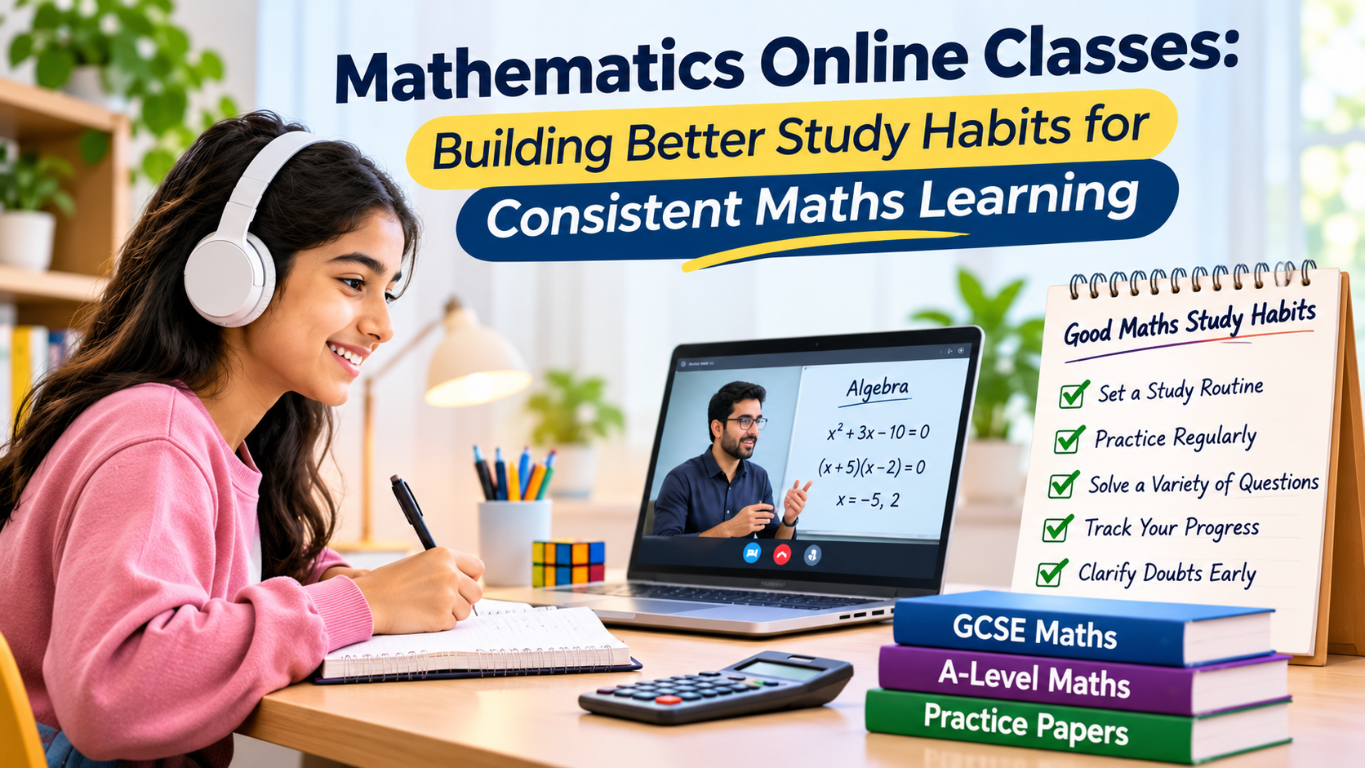
Good maths results rarely come from last-minute revision. They grow through regular effort: learning a concept, practising it, checking mistakes and returning to it. For many families, the challenge is helping a child keep a routine alongside schoolwork and other activities. Well-planned online maths lessons give students a regular time to learn, a tutor to guide them and practice to complete between lessons. The goal is to make learning focused and manageable. For learners preparing for GCSE exams, a GCSE maths tutor online can also help organise revision and keep practice focused on the topics that need attention.
Why Consistent Practice Matters
Maths topics build on one another. Secure multiplication can make fractions easier, while a good understanding of negative numbers supports algebra. If basic skills are uncertain, new topics can feel harder than they need to be. Regular practice helps students remember methods, notice gaps and become familiar with different question styles. It builds confidence as once-difficult questions become easier with effort.
How Online Lessons Build Better Habits
A regular lesson gives the week structure. Students can learn a topic, ask questions and agree what to practise next. A few short sessions between lessons help turn the explanation into lasting understanding. Online tutoring can suit different learning needs. A tutor may revisit fractions with one student and offer more challenging algebra questions to another. Students should take part actively, show their working and explain how they approached each problem.
Before, During and After a Lesson
Before class, check the topic, prepare a notebook and calculator, and review the previous lesson for a few minutes. Write down questions to ask and choose a quiet place with a reliable internet connection. During class, attempt questions instead of only watching the tutor. Explain your reasoning and ask for another example if a step is unclear. After class, review the notes, complete a few related questions independently and record mistakes to revisit.
Create a Weekly Study Routine
A realistic timetable is easier to maintain than one that fills every free hour. Try one online lesson, two or three short practice sessions and a brief review of an older topic each week. Adjust the plan to the student's age, concentration and school workload. Each session should have one clear goal, such as practising equivalent fractions or solving equations with brackets. A 20- to 30-minute focused session can be a useful starting point; younger learners may need less time, while exam students may need longer blocks.
Simple Habits That Improve Practice
Keep a mistake notebook. Record the question, the step that went wrong and the correct method. Common errors include missing a negative sign, copying a number incorrectly or choosing the wrong operation. Review these notes before a test. Show working clearly, mix question types and try to solve problems before looking at an example. Take short breaks when concentration drops. The aim is careful practice, not completing as many questions as possible.
Choosing the Right Online Maths Support
Look for a tutor who understands the student's age, current level and curriculum. Lessons should include clear explanations, student participation and feedback on what is going well and what needs attention. Ask about lesson length, group size, timings and progress updates. For exam preparation, a gcse maths tutor online can help plan revision around the correct exam board and syllabus. Support may include reviewing weaker topics, practising exam-style questions and learning to show working clearly. Check that the tutor's experience matches the student's course and tier. A GCSE maths tutor online may also help students plan timed practice and understand how marks are awarded for showing each step.
Make Maths Part of Everyday Life
Everyday activities offer simple ways to use maths. Children can compare prices while shopping, measure ingredients when cooking, estimate journey times or work out how much money they can save. These conversations show that maths is useful beyond homework. Keep activities light and suited to the child's age. The purpose is to make numbers familiar and encourage thinking, not to turn every family task into another lesson. Students who need exam-focused guidance can use a GCSE maths tutor online to connect everyday practice with the skills required by their course.
Recognise Progress and Keep Going
Progress is more than a test score. Notice whether the student starts practice with fewer reminders, explains methods in their own words, attempts questions independently and recognises repeated mistakes. These are signs that learning habits are becoming stronger. These lessons work best when students take an active role and practise between sessions. Set a manageable goal, learn from errors and return to difficult topics. With patient support and steady effort, students can become more confident and independent in maths.
Frequently Asked Questions
What to do next
- • Apply these tips in your next revision session and track progress weekly.
- • Focus on the subjects that feel hardest first, then build confidence with easier topics.
- • Book a free demo to get a personalised study plan from our expert tutors.